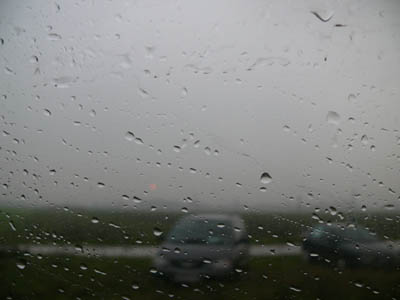
Weather is weird

Weather is weird.
This is no season. This is no proper season. Seventy degrees in November.
This is no season.
How are you, he tells the kid.
There should be fog covering that field, but there is only warm dry air.
How are you, how is a person supposed to answer that, he says.
Someone asked me that, he says, once, and it totally threw me because I paused to think about it instead of just say, fine.
The kid chuckles. Yeah.
I was all like, objectively or subjectively?
By whose standards?
What time frame are we looking at?

You walk to the store. A kid has a party, another kid says, your cat is so cute, the first kid says, that’s not my cat, and suddenly you’re walking to the store for extra catfood on your lunch break, plus something from the bakery in case a crow passes your way.

Of course it does.

Every day is the same. Get up, make coffee, read, clean something, feed cats, take shower, get dressed, go to work. Get lunch, or don’t get lunch. Read. Go home. Clean something, go to bed.

At a certain level of magnification, anyway. At a microscopic, sub-atomic level, I suppose things vary wildly. This electron will only ever be exactly here once.

This quark, now you see it, now you don’t.

Just say you’re fine.

The Gauntlet

sunrise01131008The day has a weird liminal feeling to it. Grey and quiet, except for a lawnmower, crows, traffic and pedestrians, like the soundtrack to a National Geographic documentary on urban corvids.

Odin tries his wife’s number but she doesn’t answer.

He walks down the street, past a line of crows. They just stand there watching him: the old black one with white feathers, three grey ones. More keep showing up.

Odin wonders has he overdone the crow thing.

He follows a little old woman with a tiny little dog on a leash. What is it with old people and little pets, he wonders. They can never, like, stay out all night drinking or anything. Sorry, I have to get back to the little dog! And they are the ones with all the time for adventures like that, and then they go tie themselves down.

He turns a corner and a sleek black crow swoops down from the other direction and follows him to the store, hopping from car to car.

Odin’s phone rings. It’s his wife.

The day has a weird feeling to it, says his wife.

Weird and grey and in-between, agrees Odin.

He tells her about the crow gauntlet because she always laughs at his crow stories.

He holds her up to his ear and talks to her all the way through the store.

I picked out a ham-and-cheese sub for the crows, he says.

Which ones?

All of them.

I’m getting cottage cheese now, he says.

He hangs up before paying the cashier.

He feeds all the crows he can find on his way back to the office. They eat the whole sandwich, except he eats the parts with pickles, as they don’t like pickles.

It’s like a day hidden between other days, he had said to his wife.

She agreed.

Wreath

wetplate collodion photograph of flower wreath.

Dried flower wreath, full sun, f5.6, 8 seconds. Old workhorse collodion.

Fly fishing in Austria

Man and woman standing in creek, both wearing waders, holding fishing poles.

Woman: Oh, he’s a big fella.

Man: Where? Oh, he’s big.

The big fella swims deep, nosing the gravel of the creek bed with singular concentration.

Most of the time, that’s his whole world: gravel.

Man: What’s he looking for?

Woman: Periwinkles? May-flies?

Gravel, gravel, gravel. Rarely, something shiny or something bright catches the big fella’s eye and he leaves the creek bed and swims to the surface and there’s a small splash and a dragonfly disappears, or sometimes a lure of chrome or polished brass.

Incomplete list of shiny things that have caught the big fella’s attention:

  • The phrase “better to stay silent and be thought a fool than to speak up and remove all doubt” (as a child);
  • The idea of going through life without leaving any footprints (as an older child);
  • Young woman in blue shirt eating a banana in a cafeteria (back in college);
  • Falling stars;
  • Heat lightning;
  • Fireflies;
  • Certain people;
  • The phrase, “as you live your days so do you live your life” (somewhat recently);
  • The phrase, “your problem is you think you have time” (more recently)

Man: Where’d he go?

Woman: Into that shady pool, I think.


The secret of happiness: WWASPD?

Part of being happy is doing things that make you happy.

Part of being happy is avoiding doing things that make you unhappy. This second class of things include stupid things.

By definition.

Both of these skills can be helped with the WWASPD method.

Like yesterday. There is this guy. He is driving home and there is a bottleneck where the road from Vienna goes into the Vienna Woods. The road is lined with old homes and goes from two-lane to one-lane for a block. Each end of the bottleneck has an electric sign that lights up red when there is oncoming traffic.

The sign is black so the guy goes. He meets two oncoming cars. Either the sign is not working or they ran the red light.

But since there are several oncoming cars now, he backs up and lets them pass.

The sign is black so he goes.

He meets a big, fat Audi driven by a guy about 60 with a chihuahua. They stop and look at each other. There are no cars behind the Audi, but a line of cars quickly forms behind our guy. Two things are possible: the Audi ran a red or the light is broken.

They wait like this for a couple minutes. Then the Audi begins to honk.

Cars behind our guy honk back.

What Would A Smart Person Do? thinks the guy.

The situation is out of his hands, he realizes. He can relax. The problem will solve itself, somehow.

So he relaxes while the honking goes on. It’s a nice evening and in the distance the Vienna Woods are just beginning to change color.

Eventually the Audi driver gets out of his car. Our guy rolls down his window. The Audi driver yells at him. Our guy doesn’t even try to explain his theory about the light; he just says, I’m kinda boxed in here as you can see. You’ll have to talk to the guys behind me.

The Audi driver goes and yells at the other guys. They all seem to be, as our guy noticed earlier, burly young construction workers, and they yell back. The Audi driver eventually backs up and lets everyone pass.

And they all go on their way, happily, except for maybe the Audi driver.

Time travel – 1. Indications of time travel

  1. Huge fortunes amassed through lucky investments or unusual inventions.
  2. Lottery wins
  3. People who resemble you, only older, accosting you on the street with advice.
  4. Assassinations
  5. Hitler getting beat up a lot as a child
  6. Serial killings of similar-looking people by assassins from the future with only approximate descriptions of their target.
  7. Teddy Roosevelt prevented from annexing Mexico
  8. Eradication of smallpox
  9. Beyonce Knowles
  10. What else?


Watch

Watch gets up early and finishes the IKEA thing in the cellar to surprise his wife, and it works, she is surprised.

You have a long lunch break on Fridays, don’t you? says his wife, and asks him to go to the Konzerthaus to get tickets she had ordered.

He drinks espresso, makes scrambled eggs, goes to work.

Watch reads an aphorism online, posted by a man who seems to have concluded that his function in life is to share wisdom. Much of the wisdom is good, so Watch keeps reading it.

This one says, The secret to unhappiness is taking life personally.

At lunch Watch walks fast to catch a streetcar, partly to get to the Konzerthaus as fast as he can, partly because a work colleague is walking the same direction, a little ahead of him, and hurrying to avoid walking with Watch for some reason. By walking the same speed, Watch prevents him from escaping; soon, though, he runs out of sadism and lets the man get away.

Watch changes streetcars twice on the way to the Konzerthaus. When he boards the second streetcar, which is half full, a woman cackles a nuthouse laugh.

Okay, thinks Watch.

Then an angry man walks past, two meters tall, wearing a leather cowboy hat. Watch is careful not to look at him, because the man is paranoid schizophrenic.

You learn to see this sort of thing.

The man is complaining about whatever.

The nuthouse laugh woman laughs again. She can’t help it. Paranoid man demands to know who is laughing, and threatens to bash their brains in whoever it is. The woman stops laughing for a couple minutes.

Soon, though, she can’t hold it back and laughs again. The man rushes back to where she sits, which is where Watch happens to be standing, and says, Who is it? Who is laughing?

The streetcar stops and Watch gets out. He walks to the next station and gets on the third streetcar, which takes him close to the Konzerthaus.

Everyone else conducting transactions at the Konzerthaus seem to be retired and in their seventies, a condition they all deal with using a variety of strategies. The man is important and loud and dominant. He spends €600 on tickets. Then he wants CDs and his act sort of falls apart here because he is not sure which CDs he wants. The cashier waits patiently, which doesn’t make him feel any better.

The woman after the man is irritable and short and impatient. She completes her transaction and then interrupts the following transaction to demand a receipt which, the cashier points out, she already has.

The other woman, in front of Watch, is nice. She tells Watch her transaction will take a long time. Watch says he is only picking up preordered, prepaid tickets, and she offers to let him go ahead. Watch expresses gratitude.

A couple sits at a table and talks about something. Meanwhile a second window opens and Watch gets the tickets and leaves.

He gets on a streetcar at an atypical stop, with an oddly shaped shelter, as if it had been designed in the 1960s to look futuristic. The streetcar putters along until they get to Karlsplatz/Oper. It stops at a light, abruptly, and the bell rings (which the drivers normally use to warn people and cars etc). It rings for a long time, then stops. The streetcar does nothing after that.

Watch looks up toward the driver’s cabin, which is in the next car, but sees nothing. No commotion, nothing that would mean accident or murder.

The doors are all closed and turned off so no one can get out.

Other streetcars start piling up behind this one. A driver forces a door open, and tells someone the driver of Watch’s streetcar had disappeared. Then he leaves and the door closes again, retrapping everyone.

Eventually, after 15 minutes, a female passenger forces a door open and everyone disembarks and uses alternative modes of transportation. Watch takes a subway. He buys food in a station. It takes him a long time to decide what to get, because everything being sold at the station has given him food poisoning at one time or another in the past.

He catches another streetcar back to work. It takes about 5 minutes to walk from the stop to his office, during which time he eats crispy chicken and rice and vegetables.

He gets back right on time.